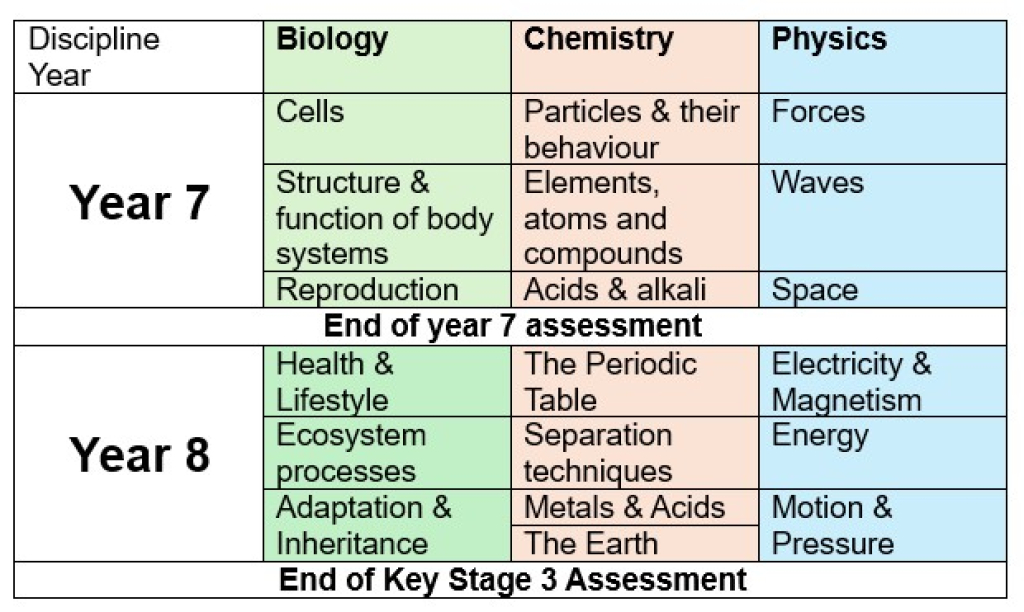
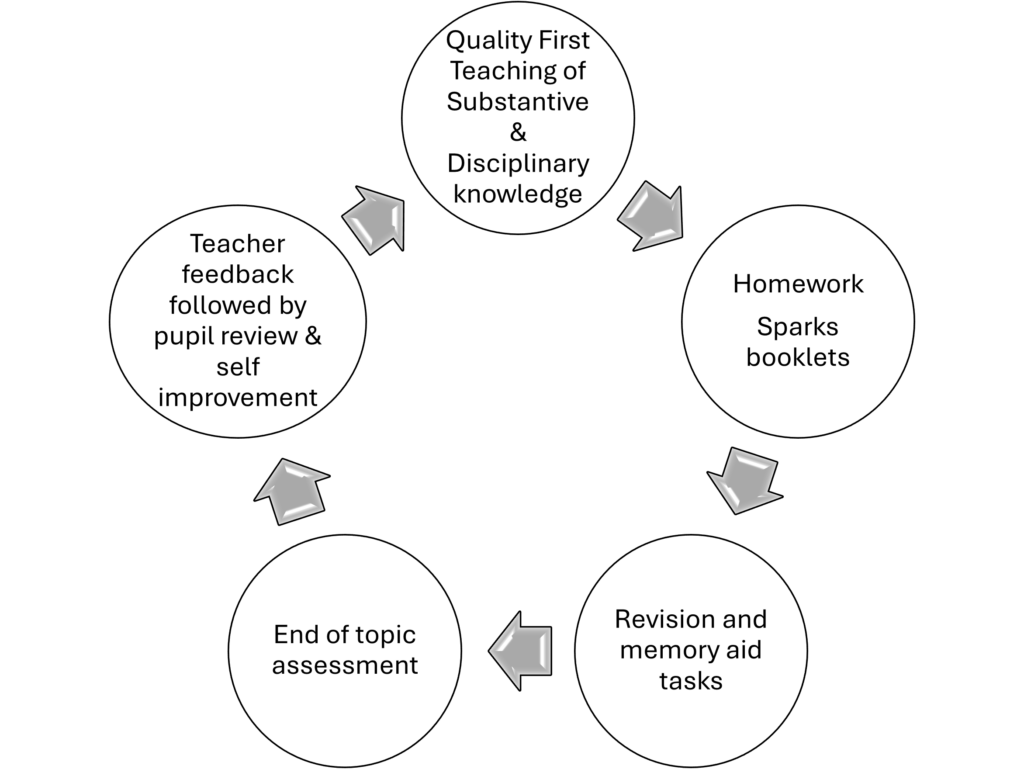
For GCSE, pupils either complete the AQA Combined Science (Trilogy) course or the AQA Separate Science. AQA was selected as the exam board by comparing the quality of resources and support materials, as well as how the curriculum was structured and sequenced. The curriculum is planned based on the material provided by Oxford University Press (OUP). We have found that it links well with the content taught at Key Stage 3 and enables pupils to build confidence in concepts from year 9 through to year 11. As with Key Stage 3, at the end of each unit (Biology, Chemistry and Physics), all pupils complete an end of topic test. These are tiered tests and link directly to the content just taught, as well as including scientific enquiry skills applicable to all parts of the course. Following each test, a detailed review sheet follows where pupils complete IT in relation to their individual areas of concern. We are currently trialling a new assessment programme for Year 9 this year. For details, please do not hesitate to contact Mrs Barber.
To help support pupils through either the Combined or Separate Science course, all pupils have access to the OUP textbooks as well as other electronic resources supplied via Kerboodle from home. As well as the textbooks, pupils will also have the opportunity to purchase revision and support materials that are supplied by CGP. These include practice exam papers, revision guides and revision flash cards. Pupils’ in receipt of Pupil Premium funding will automatically receive these resources. Purchasable revision materials are offered to pupil’s beginning their GCSE in Year 9 and each year thereafter.
Key completion points are provided to staff to ensure all pupils reach the same points in the course. This is applicable to both Key Stage 3 and 4. This is to ensure all pupils have covered the same content prior to end of year examinations, PPE examinations and crucially the GCSE examinations at the end of year 11.
Homework
Homework across both Key Stage 3 and 4 plays a vital role in reinforcing learning. It is important that homework is purposeful and adds to the development of understanding in pupils.
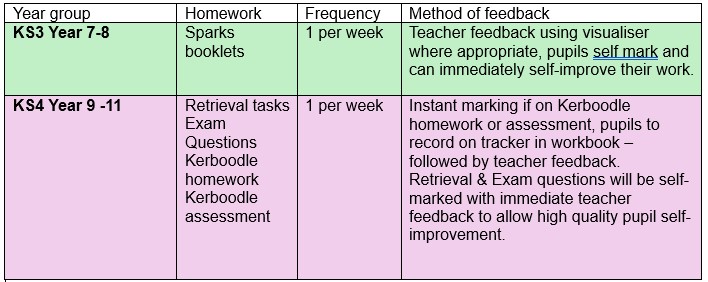
There are three main assessment points during the course of each academic year – Autumn PIPS, Spring PIPS, and Summer PIPS. Data collected from the end of topic tests as well as from formative assessments is used to provide forecast data and Attitude to Learning (ATL) scores for each assessment period. Analysis of this data is carried out by Mrs Barber who will then discuss with relevant staff any necessary intervention to those pupils requiring additional support.